The Walk Off the Field
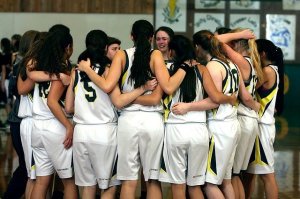
The scoreboard reads 0:00. Your teammates are hugging, crying, or just staring at the turf. Somebody’s dad is taking pictures. And you are standing there in a jersey you will never put on again.
If you are a fall senior, that moment is either right in front of you or just behind you. For a lot of you, this was more than your last game of the year. It was your last game, period. No college roster. No next season. Just a uniform to turn in and a locker to clean out.
Nobody really prepares you for the quiet that comes next. The 3:00 practice slot is suddenly empty. Your group chat goes silent. People who used to ask “Who do you play this week?” now ask “So what are you up to?” And sometimes you don’t have a good answer.
If that is where you are, you are not weak, and you are not alone. The end of a season can stir up a hard question: If I’m not an athlete anymore, who am I?
That question deserves a real answer. Not a pep talk. A true one.
Why It Hurts So Much
If the end of your sport has hit you harder than you expected, you’re not imagining it. People who study athletes have noticed the same thing for years.
When athletes see themselves mostly as athletes, the end tends to be harder. Many feel more anxious in the months after their last game. Some say it feels like they lost their purpose, not just their sport.
But there’s good news too. Athletes who build friendships, interests, and plans outside their sport usually handle the change better. Having good people around you, and a bigger sense of who you are, makes a real difference.
That makes sense. When one thing becomes your whole life, losing it can feel like losing yourself.
That is not just a psychology problem. It is a heart problem. And the Bible has a lot to say about it.
Your Worth Was Never Your Jersey
We call this part of life the Inside Game. It asks one simple question: What motivates me? Under that question is a deeper one: Where does my worth come from?
For many athletes, the honest answer has been sport. Not on paper, but in real life. A good game meant a good week. A bad game meant you felt like a bad person. Your mood rose and fell with the box score. That is a heavy way to live. And when the games stop, it can feel like the ground drops out from under you.
The apostle Paul wrote to a group of Christians who were trying to find their worth in the wrong places too. Here is what he told them:
“If then you have been raised with Christ, seek the things that are above, where Christ is, seated at the right hand of God. Set your minds on things that are above, not on things that are on earth. For you have died, and your life is hidden with Christ in God. When Christ who is your life appears, then you also will appear with him in glory.” (Colossians 3:1-4, ESV)
Look closely at that last line. Paul does not say Christ is part of your life. He says Christ is your life.
Here is what that means. If you have put your trust in Jesus, you are joined to Him. His death for your sin counts as yours. His new life is now yours. Paul says your life is “hidden with Christ in God.” Think of something locked in a safe that no one can break into. A final whistle cannot reach it. A torn ACL cannot touch it. A coach cutting you, a scout passing on you, or a loss in the playoffs cannot take it away.
This does not mean sport is bad or that your season did not matter. The “things on earth” in this passage are not wrong to enjoy. The problem comes when we ask them to be our life. A sport makes a great gift and a terrible god.
Paul said it again in another letter:
“I have been crucified with Christ. It is no longer I who live, but Christ who lives in me. And the life I now live in the flesh I live by faith in the Son of God, who loved me and gave himself for me.” (Galatians 2:20, ESV)
Notice the reason Paul gives. Jesus “loved me and gave himself for me.” Your value was settled at the cross, not on the field. You did not earn it with a stat line, and you cannot lose it when the stats stop.
That is the freedom the Inside Game is about. When your worth is secure in Christ, you no longer have to prove yourself. You can grieve the end of your season honestly. And you can walk into whatever comes next without fear that you have lost who you are.
If Your Season Ended Too Soon
Some of you did not get a final game. You got a hospital visit, a scan, or a doctor saying, “You’re done for the year.” Maybe you watched senior night from the sideline in a boot or a sling.
That kind of ending can hurt in its own way. You did not get to choose it, and you did not get to say goodbye on your own terms. It is okay to be sad about that. It is okay to be angry. The Bible is full of people who brought honest pain to God, and He did not turn them away.
The truth of Colossians 3 is just as true for you. An injury can take your season, but it cannot take your life in Christ. You are not “less” because you are hurt. You are not forgotten because you are not on the field.
God also does not waste pain. That does not mean every injury comes with a quick reason you can see right away. Often it doesn’t. But Scripture shows again and again that God is near to the hurting and can use even hard seasons to shape us. You can trust Him with what you don’t understand yet.
What to Do Next
Knowing your worth is in Christ is the foundation. But it helps to have some next steps too. Here are a few for the weeks ahead.
- Let yourself grieve. Something you loved has ended. Being sad is not a lack of faith. Tell God how you feel, in your own words. The Psalms are a good place to start.
- Say thank you. Make a list of what your sport gave you: friends, lessons, coaches, memories. Thank God for each one. Gratitude helps you hold the past with an open hand.
- Stay connected. Your team may scatter, but you still need people. Grab lunch with a teammate. Show up at your youth group or church. Don’t spend the extra free time alone.
- Try something new. Pick up an interest you never had time for. Serve somewhere. Coach a younger player. Join a club. You are finding out more of how God made you.
- Keep moving. Your body was built to be active. A pickup game, a run, or the weight room can still be a gift, even with no scoreboard.
- Ask for help if it gets heavy. If the sadness or worry won’t lift, or you stop enjoying things you used to love, talk to a parent, a pastor, a school counselor, or a doctor. Getting help is not weakness. It is wisdom.
A word to coaches and parents: Don’t wait for the last game to talk about life after sport. Ask your athletes about their friends, their faith, and what they enjoy outside the game. Celebrate who they are, not just how they play. And in the weeks after the season, check in. A text that says “I’m proud of who you are” can mean more than you know.
Before You Turn In the Jersey
Take a few minutes with these questions. Write your answers down if you can.
- When I had a bad game, what did I believe about myself? Where did that belief come from?
- What would change if I truly believed Christ is my life?
- Who is one person I can talk to honestly about how I’m feeling right now?
- What is one new way I could use the gifts God gave me this winter?