
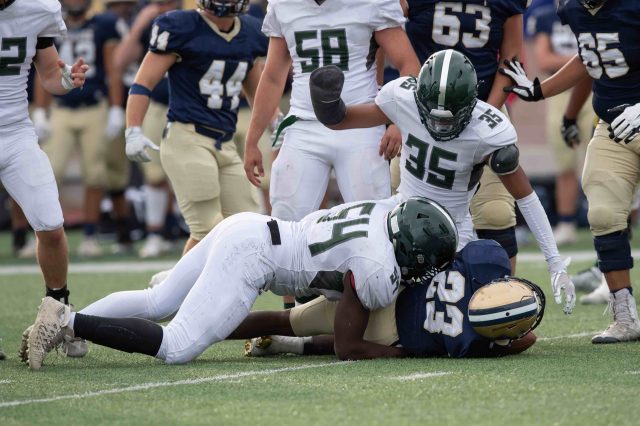
The Call That Stings
You know the feeling. You beat the throw by a full step, and the umpire rings you up. You go straight up for the rebound, and the whistle says you fouled. You score the go-ahead goal, and the flag goes up for offside when you know you were onside.
Your face gets hot. Your chest gets tight. You want to say something, and maybe you do. Even after the next play starts, your mind keeps replaying the call. Two minutes later, you are still arguing with it in your head.
If you play sports, bad calls will happen. Officials are human. They miss things, and sometimes they get it flat wrong. Feeling frustrated is normal. The real question is not if a call will go against you. It is what you will do when it does.
What Your Frustration Is Telling You
A bad call feels unfair, and often it is. But our reaction can also show us something about our hearts. Strong anger is like a warning light on a car’s dashboard. It doesn’t tell you everything, but it tells you to look under the hood.
Ask yourself a few honest questions:
- Who am I trying to impress? If the call made you look bad in front of a coach, a scout, a parent, or your followers, the sting may be about approval more than fairness.
- What am I afraid of losing? Playing time, a starting spot, a stat line, a scholarship. When those things feel like they decide your worth, every call feels like a threat.
- Do I feel like I have to prove something? When your identity rides on how you perform, a bad call doesn’t just cost you a point. It feels like it costs you you.
Athletes in Action teaches that the big question behind our motives is simple: What motivates me? When performance becomes the place we get our value, we live in fear. And fear turns small moments, like one missed call, into huge ones.
The good news is that your worth was never up to the official. If you belong to Jesus, your identity is settled. God’s love for you doesn’t rise on a good call or fall on a bad one.
What Scripture Says About Anger
The Bible doesn’t tell us to pretend we’re never upset. But it does show us a better way to handle it.
“Know this, my beloved brothers: let every person be quick to hear, slow to speak, slow to anger; for the anger of man does not produce the righteousness of God.” (James 1:19-20, ESV)
James isn’t saying anger is never right. He’s saying our anger, left on its own, doesn’t produce the kind of life God wants for us. Yelling at the ref might feel good for a second. It won’t change the call, and it won’t make you more like Jesus.
The best picture of this is Jesus himself. He faced the most unfair “call” in history. He was perfect, yet he was accused, mocked, and put to death. Peter writes:
“For to this you have been called, because Christ also suffered for you, leaving you an example, so that you might follow in his steps. He committed no sin, neither was deceit found in his mouth. When he was reviled, he did not revile in return; when he suffered, he did not threaten, but continued entrusting himself to him who judges justly.” (1 Peter 2:21-23, ESV)
Jesus wasn’t weak or passive. He simply knew who the true Judge was. He trusted his Father to make things right in the end. That trust freed him from needing to win every argument in the moment.
To be clear, a missed call in a game is not the same as what Jesus went through. Peter was writing to believers who were truly suffering. But the pattern he shows still applies to us: you can feel the sting of unfairness and still choose to trust God instead of striking back.
How to Respond When the Call Goes Against You
Trusting God doesn’t happen by accident. Like any skill, it takes practice. Here are a few ways to build it.
In the moment: breathe and pray. Before you say anything, take one slow breath. Then pray a short prayer in your head, something like, “Lord, I trust You with this.” Five seconds can keep you from a technical foul, a yellow card, or words you’ll regret.
On the next play: let it go. Great athletes have a short memory for mistakes, including other people’s. You can’t replay the call, but you can control your next effort. Every minute you spend stewing is a minute you’re not fully in the game.
If you need to speak up: do it the right way. Some sports allow captains or coaches to ask about a call. If that’s your role, keep your voice calm and your words respectful. Ask a question instead of making an accusation. The official will remember how you treated them.
After the game: be honest with God. Bring your frustration to Him. The Psalms are full of honest prayers from people who felt wronged. God can handle your feelings. Talking to Him helps keep frustration from turning into bitterness.
Over time: notice your patterns. If small calls set you off again and again, pay attention. Talk with a coach, a teammate who follows Jesus, or a mentor you trust. Ask them to help you see what’s really going on underneath.
One more thing: officials are people too. Many of them are working long hours for little pay because they love the game. A kind word after a game, even one where you didn’t like their calls, can be a powerful way to show the love of Jesus.
Playing for an Audience of One
The crowd sees the call. Your coach sees how you react. Your teammates notice whether you lose your cool. But there is One whose view matters most.
When you play for an Audience of One, the scoreboard and the stat sheet lose some of their grip on you. You still compete hard. You still want to win. But you don’t need every call to go your way to know you are loved, because Jesus already settled that on the cross.
That’s real freedom. You can feel frustrated, let it go, and get back to playing the game you love for the God who gave it to you.
Think About It
- What kind of call frustrates you the most? Why do you think that is?
- What does your reaction to a bad call show about what you value?
- What is one thing you can do in your next game to respond the way Jesus would?