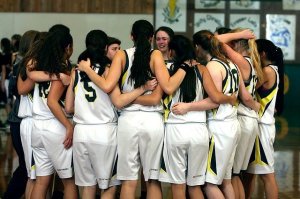
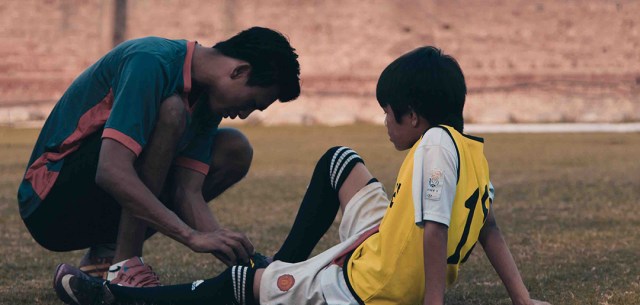
You have a teammate who tore their ACL in the third game of the season.
The first week, their phone blew up. Teammates texted. Coaches checked in. A couple of guys dropped off food.
By week four, it got quiet.
Your teammate still came around, at least some days. But they sat at the end of the bench in street clothes while everyone else ran drills they couldn’t do. Road trips left without them. When the team won a big game, they clapped along, but it felt like they were watching through a window.
If you’ve played sports for very long, you’ve seen this happen. Maybe you’ve lived it. An injury doesn’t just hurt a knee or a shoulder. It can slowly pull a person away from the people they care about most. And the teammates around them often don’t know what to do, so they do nothing.
This article is for the teammate who wants to do something.
Why Injury Creates Distance
Most of the time, nobody pushes an injured athlete away. The distance just grows. Here are a few reasons why.
Their routine changes. Rehab often happens in the training room while the team is on the court or field. They miss the warmups, the bus rides, and the inside jokes that make a team feel like a team.
Their sense of who they are gets shaken. For a lot of athletes, sport is a big part of how they see themselves. When they can’t play, they may start to wonder, “If I’m not a player right now, who am I?” That’s a heavy question to carry alone.
They feel like they don’t help anymore. Some injured athletes feel like a burden. They don’t want to be in the way, so they quietly step back.
Teammates pull back too. Usually it isn’t because they don’t care. The season moves fast. Things feel awkward. People worry they’ll say the wrong thing, so they say nothing at all.
The distance usually isn’t anyone’s fault. But somebody has to close it. That somebody can be you.
One Body, Many Members
In 1 Corinthians 12, the apostle Paul writes to a church that was divided. Some people thought they mattered more because of their gifts. Others felt left out. So Paul paints a picture everyone could understand: the human body.
“The eye cannot say to the hand, ‘I have no need of you,’ nor again the head to the feet, ‘I have no need of you.’ On the contrary, the parts of the body that seem to be weaker are indispensable.” (1 Corinthians 12:21-22, ESV)
A few verses later he adds:
“If one member suffers, all suffer together; if one member is honored, all rejoice together.” (1 Corinthians 12:26, ESV)
Paul is talking about the church, the people who belong to Jesus. A sports team is not the church. But if you follow Christ, this is how He teaches you to see people. And you carry that way of seeing into the locker room.
Notice what Paul says about the parts that “seem to be weaker.” They aren’t extra. They aren’t optional. They are needed. In God’s eyes, a person’s worth was never based on what they could do. That is true for your injured teammate, and it is true for you.
Paul also says God put the body together so “the members may have the same care for one another” (1 Corinthians 12:25, ESV). Care isn’t just a feeling. It shows up. When one part of the body hurts, the rest of the body doesn’t ignore it. It leans in.
That is what Jesus did. Over and over in the Gospels, He moved toward people others avoided. He didn’t wait for hurting people to find their way back to the group. He went to them.
Seven Ways to Close the Gap
You don’t need a perfect speech. You just need to show up, again and again. Here are some places to start.
- Say what you see. Keep it simple and honest: “Hey, I’ve noticed you haven’t been around as much. I miss having you around.” That one sentence tells them they still matter.
- Go to where they are. Stop by the training room. Walk with them to rehab. Sit with them at lunch. Don’t wait for them to come back to you.
- Keep them in the loop. Add them to the group chat. Save them a seat on the bus if they travel. Ask what they saw on film or how they’d guard the other team’s best player. Remind them they still know the game and still belong.
- Ask better questions, then listen. Try “What’s been the hardest part?” or “How are you doing, not just your knee?” Then let them talk. You don’t have to fix anything.
- Celebrate small wins. The first day off crutches. The first jog. The first full practice. Those moments are a big deal, so treat them that way.
- Pray for them, and offer to pray with them. Ask how you can pray. If they’re open to it, pray together. If they aren’t, keep praying for them on your own. Either way, don’t make it awkward or forced.
- Stay with it. The first week is easy. Week six is where it counts. Put a reminder in your phone if you need to. Being steady over time says more than one big gesture.
One more idea: invite them into life outside of sport. Grab food. Play a video game. Go to church or a Bible study together. It reminds them they are more than an athlete, and that your friendship is about more than a jersey.
What Not to Say (and Do)
Most of us mean well. But some words can make an injured teammate feel more alone, not less.
- Rushing to “God has a plan.” It’s true that God is at work, even in pain. But said too fast, it can sound like you’re brushing off their hurt. Joseph waited years before he could see how God used his suffering (Genesis 50:20). Sit with your teammate in the hard part first.
- Promising how it ends. “You’ll come back stronger” sounds kind, but you don’t know that. Instead, promise what you can keep: “I’m with you either way.”
- Making it about you. “I sprained my ankle once and…” usually isn’t helpful right now. Keep the focus on them.
- Joking about their spot. Depth chart jokes can sting when someone is already scared about losing their place.
- Treating them like a project. They don’t need to be fixed. They need a friend.
When It’s More Than a Rough Patch
It’s normal for an injured athlete to feel sad, frustrated, or left out. But sometimes the struggle goes deeper. Watch for signs like these:
- Pulling away from everyone, not just the team
- Losing interest in things they used to enjoy
- Big changes in sleep or eating
- Talking about feeling hopeless or like a burden
- Using alcohol or other substances to cope
You are not their counselor, and you don’t have to carry this alone. Tell a coach, athletic trainer, team chaplain, or parent you trust. Gently encourage your teammate to talk with a counselor or doctor. Getting help is not a sign of weak faith. God often brings healing through wise people He puts in our lives.
If your teammate ever talks about hurting themselves or not wanting to be alive, tell a trusted adult right away. In the U.S., you can also call or text 988 to reach the Suicide and Crisis Lifeline.
Who Showed Up
Years from now, your teammate might not remember your season record. But they will remember who showed up when they couldn’t suit up.
That’s part of what Athletes in Action means by Victory Beyond Competition. The scoreboard matters for a night. The way you love people lasts much longer. Caring for a hurting teammate may never make a highlight reel, but it is the kind of faithfulness God sees and honors.
So think about your team right now. Is there someone who has drifted to the edge? Don’t wait for them to find their way back. Go to them.
Think It Through
- Who on my team is hurting or feels left out right now?
- What has kept me from reaching out?
- What is one thing I can do this week to close the gap?